The American Orthodox Catholic Church (AOCC) affirms the ancient faith, apostolic order, and liturgical life of the One, Holy, Catholic, and Apostolic Church. While we hold fast to the Orthodox tradition, we also recognize the unique pastoral needs of the American context. Among the questions we are often asked is why our Church permits the consecration of married men to the episcopacy.
This article offers a theological and pastoral rationale for our practice, grounded in both ancient precedent and present mission.
1. Apostolic and Historical Precedent
The earliest bishops of the Church included married men. According to Scripture, the Apostle Peter himself was married (cf. Matthew 8:14; 1 Corinthians 9:5). The pastoral epistles explicitly state that a bishop should be “the husband of one wife” (1 Timothy 3:2), implying that marriage was not only permitted but somewhat expected among early overseers.
The shift toward episcopal celibacy came gradually and contextually. By the fourth century, especially in the East, monasticism became the primary training ground for bishops. This was not because married bishops were heretical or invalid, but because monastic bishops were seen as more free to serve the wider Church without the demands of family life. It was a discipline, not a dogma.
The canon law of the early Church confirms this: Canon 6 of the Council of Trullo (691) and others allowed married men to become priests and deacons, though by that time, bishops were generally selected from the monastic ranks. This shift was cultural, not theological.
2. Marriage and the Ontology of the Episcopacy
The grace of the episcopacy does not contradict the sacrament of marriage. Both are sacramental vocations that sanctify the whole person. In fact, a married bishop embodies the same image of Christ that a celibate bishop does: Christ, the Bridegroom of the Church. In a married bishop, that image is manifest in both the mystical union with the Church and the visible witness of marital fidelity.
A bishop is called to be a father. While monastic bishops are spiritual fathers by virtue of their renunciation, married bishops model fatherhood in both the spiritual and natural sense. Especially in cultures where fatherlessness and broken homes are common, the presence of bishops who are husbands and fathers brings healing, credibility, and pastoral closeness.
3. Pastoral Necessity and Missionary Economy
The AOCC serves communities that have historically been underserved by traditional jurisdictions, including African American, Afro-Latino, Indigenous, and working-class white populations. These communities often do not have access to the monastic infrastructure that historically produced bishops.
Rather than importing foreign hierarchies or waiting for ideal conditions, we have prayerfully followed the principle of oikonomia (economy): applying the spirit of the canons to our context for the sake of salvation. We believe that it is better to have local, pastoral bishops who are spiritually and theologically formed, even if they are married, than to delay the growth of the Church for the sake of maintaining a later disciplinary custom.
In this, we are not breaking with Orthodox tradition but returning to its deeper and earlier roots.
4. Unity Without Uniformity
We recognize that most Orthodox Churches today consecrate only celibate bishops. We honor that discipline and do not seek to impose our practice on others. However, we also believe that unity in the faith does not require uniformity in all ecclesiastical disciplines.
Just as local churches have historically adapted liturgical languages, architectural styles, and pastoral structures to their culture, we believe that the allowance of married bishops, when done prayerfully and under episcopal oversight, can coexist with traditional norms without compromising the faith.
5. A Witness for the American Church
America is a spiritual mission field. It is also a culture hungry for authenticity, stability, and integrity. The AOCC believes that married bishops, far from being a novelty, can serve as a prophetic witness to the sacredness of both marriage and apostolic authority. In a world that often divides the spiritual from the personal, we embody the unity of the two.
We affirm that celibacy is a gift. But so is holy marriage. We need both in the Church.
We pray that our example will not cause scandal but open conversation. Our aim is not to break from Orthodoxy, but to help rebuild it in the soil of a new land, with the same ancient roots, bearing new and faithful fruit.
The AOCC remains committed to the Orthodox faith, in its fullness and beauty. Our practice of consecrating married bishops is not a deviation but a return, a return to the apostolic pattern, a pastoral response to our mission field, and a step toward making Orthodoxy truly native to America.
We welcome dialogue, correction, and collaboration as we pursue the unity of the faith in the bond of peace.
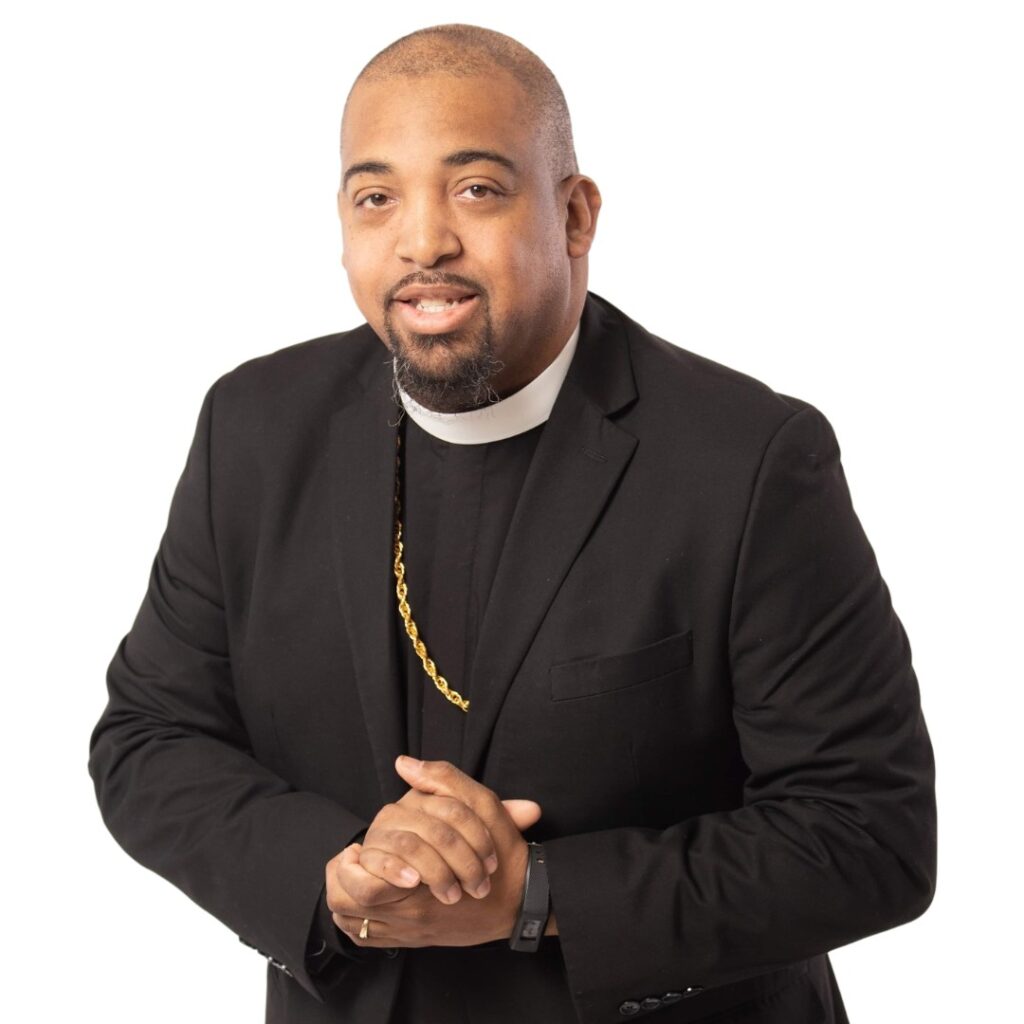
Archbishop Wayne Daniels
Northeast Diocese and Chancellor of the American Orthodox Catholic Church